How IB Schools Foster Critical Thinking Compared to Traditional Schools

Teacher guides group activity in IB® Schools class

Parents can compare class size, curriculum, and test performance all day and still miss the real differentiator: whether a school routinely asks students to explain their reasoning, test ideas, and solve unfamiliar problems. That habit is the core of critical thinking, and it shapes how students learn long after elementary school.

This is why the discussion around traditional vs IB education matters. Both can build strong fundamentals. The difference lies in how consistently each model practices reasoning and analysis as part of everyday instruction.

Why Critical Thinking Matters in Education

Critical thinking turns knowledge into judgment. It shows up when a student can evaluate a claim, support an answer with evidence, and adjust their thinking after learning something new. Those skills matter in every subject because they help students handle complexity without shutting down. At the elementary level, this is not about being “advanced.” It is about building habits: noticing patterns, asking useful questions, explaining choices, and revising work when needed.

What is an IB Education?

The International Baccalaureate is a global framework that emphasizes inquiry, reflection, and conceptual understanding. In practice, IB learning is designed to connect ideas across subjects and build skills such as research, communication, and reasoning alongside core academics. Students are expected to do more than complete tasks. They are expected to explain how they arrived at an answer and what evidence supports it.

For families exploring private IB® elementary schools in Virginia Beach, the most useful lens is classroom behavior: students discussing ideas, making connections, and practicing how to justify their thinking.

How IB® Schools Encourage Critical Thinking

IB schools build critical thinking into the daily routine through inquiry-based learning. Instead of starting with memorization, instruction often begins with a question, problem, or concept that requires students to investigate and explain. A reading lesson might ask students to cite what in the text supports a claim. A science topic may begin with observation and prediction, then move into testing ideas and reporting results.

IB classrooms also normalize reflection. Students revisit what worked, what did not, and what they would change next time. Over time, that repetition strengthens metacognition, which is the ability to understand how you learn and make better choices because of it.

Critical Thinking in Traditional Schools

Traditional schools vary, but many share a common structure: grade-level standards, subject blocks, and clear benchmarks. That structure can be a strength. It provides consistency and can be highly effective for building foundational reading and math skills.

Critical thinking can absolutely develop in traditional settings, especially when teachers use discussion, writing, and open-ended problem solving. The limitation is often time and measurement. When instruction is heavily shaped by testing formats that reward speed and recall, deeper reasoning may happen less consistently, even when educators value it.

Key Differences Between IB® and Traditional Schools in Developing Critical Thinking

Students collaborate in IB® Schools class

1. How learning begins

Traditional instruction often starts with direct teaching, then practice, then assessment. IB learning more often starts with exploration and questioning, then builds knowledge through discussion, research, and guided problem solving. Both models teach content. The difference is whether reasoning is practiced from the beginning or added later as enrichment.

2. How subjects connect

Traditional education is often segmented by subject. IB learning is more interdisciplinary, which pushes students to use skills across contexts. A single unit may require reading, writing, basic data interpretation, and presentation skills together. That format helps students practice thinking like real problems do, since real problems rarely arrive labeled “math” or “language arts.”

3. How understanding is assessed

Traditional assessment often relies more on quizzes and tests. IB environments tend to use a wider mix, including projects, presentations, writing, and performance tasks. The goal is to evaluate reasoning and application, not only recall. This changes what students are rewarded for. They learn that explaining their process matters, not just arriving at a final answer.

4. How classroom culture handles being wrong

Many students avoid risk when they fear mistakes. IB classrooms often build revision and discussion into the process, making it safer to try out an idea, defend it, and refine it. Traditional classrooms can create the same culture, but it depends more on individual teaching style and pacing constraints.

Read more: Difference Between IB® School and Regular School.

Why Parents Should Consider IB for Developing Critical Thinking

The benefits of IB education often become most evident in how students approach their work. When kids practice explaining their thinking, listening to other perspectives, and revising their ideas, they tend to become more confident learners. They also become more adaptable, with the tools to work through uncertainty rather than waiting for a single “right method.”

If you’re weighing traditional vs IB education, the most useful question is: which environment provides your child with more consistent practice in reasoning, explanation, and problem-solving while still supporting strong fundamentals?

Conclusion

IB schools and traditional schools can both support strong academic growth, but they often develop critical thinking through different daily habits. IB learning tends to emphasize inquiry, cross-subject connections, and reflection as a routine part of instruction. Traditional education often emphasizes structure and benchmarks, with critical thinking depending on how much room exists for discussion and open-ended work.

If you want to evaluate whether an IB approach fits your child, a campus visit is the fastest way to see the difference in action. Families exploring private IB® elementary schools in Virginia Beach can use a tour to observe how students communicate, collaborate, and explain their thinking. 
Frequently Asked Questions

The Early Years Benefits of Sandbox Play

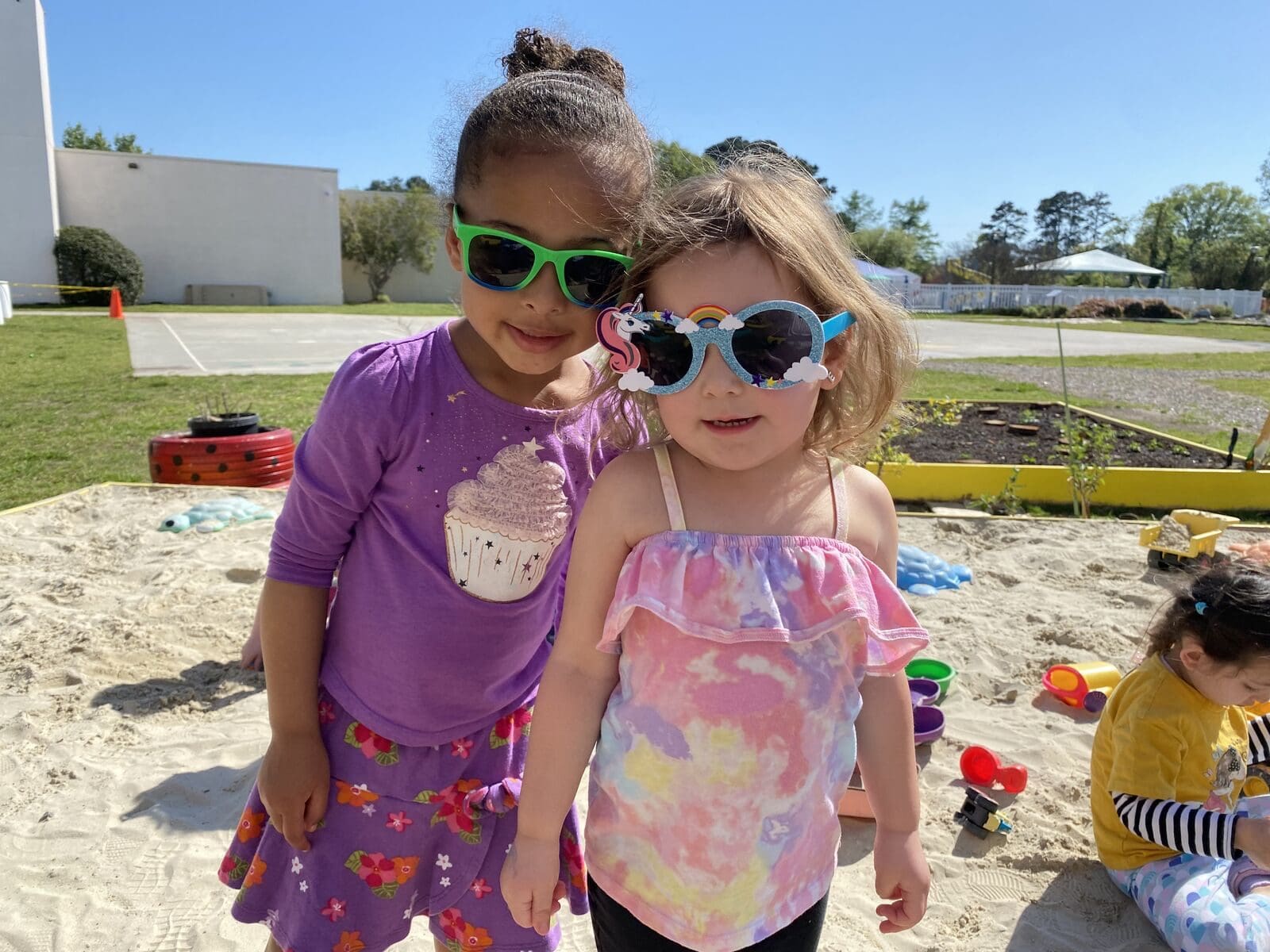
Two girls are playing sandbox play at IB School

Sandbox play is more than just a childhood pastime—it’s a catalyst for multifaceted growth in young learners. At Strelitz International Academy, we’ve witnessed the strong impact of this timeless activity on our Early Years students. In our new sandbox, children engage in collaborative play that fosters essential social skills. They negotiate, communicate, and cooperate as they build together, laying the groundwork for future interactions and relationships both in and out of the classroom.

Moreover, the sandbox serves as a place for imagination to flourish. Within its confines, children become architects of their own worlds, shaping landscapes and narratives with boundless creativity. This unstructured play environment encourages experimentation and problem-solving, nurturing cognitive development in a way that structured activities cannot. As they explore the possibilities of the sandbox, our Early Years students expand their imaginative horizons and develop the resilience to overcome challenges—an essential skill for navigating the complexities of the world around them.

Beyond its cognitive and social benefits, sandbox play offers a sensory-rich experience that is integral to holistic development. The tactile sensation of sand under their fingers, the warmth of the sun on their skin, and the sounds of laughter fill their sensory landscape, enhancing their sensory processing skills and overall sensory awareness. Through the simple act of playing in the sandbox, children profoundly engage with the world, cultivating empathy, self-expression, and a deeper understanding of themselves and others. Contact SIA today and schedule a visit.  Call us at 757-424-4327 or email at astpierre@strelitzacademy.org for a learning journey unlike any other.

SIA- The IB® Way

students raised the hands in the IB classroom

In a world that demands creativity, critical thinking, and empathy, the International Baccalaureate (IB)® program at Strelitz International Academy (SIA) offers a holistic education. For parents seeking to foster academic excellence, character development, and global citizenship in their children, the IB® Primary Years Programme (PYP) at SIA is an excellent choice!

At the heart of IB® education is encouraging students to inquire and explore their natural curiosity. Rather than simply absorbing information, SIA IB® students are empowered to question, investigate, and seek answers. This fosters a love for learning that extends beyond the classroom and into all aspects of life. In SIA’s nurturing, collaborative environment, creativity flourishes, with students encouraged to think outside the box and explore innovative solutions to real-world problems.

In the IB® PYP at SIA, students learn academic subjects and develop essential communication skills. They are taught to express themselves effectively, including through multiple languages. At SIA, our students learn Hebrew starting in Kindergarten. This emphasis on communication enhances academic achievement and equips students with the ability to connect with people from diverse backgrounds, fostering understanding and empathy.

IB® education goes beyond rote learning; it cultivates critical thinking and a global mindset. SIA students are encouraged to consider multiple perspectives, challenging their assumptions and broadening their worldviews. By engaging in rigorous inquiry and exploration, IB® students develop a deeper understanding of complex issues and learn to approach problems creatively and open-mindedly.

One of the hallmarks of IB® education is the emphasis on action. At the end of each unit of inquiry, students are challenged to apply their learning to real-life situations and take action to positively impact their community. Through action projects, SIA IB® students learn that they have the power to effect change and contribute meaningfully to society, instilling in them a sense of agency and responsibility.

IB® education involves the entire Strelitz school community in a shared mission of fostering compassion, kindness, and empathy. By celebrating our common humanity and embracing diversity, SIA creates an inclusive environment where everyone feels valued and supported. This is rooted in the belief that education can build a better and more peaceful world—a principle embodied in the concept of “tikkun olam,” repairing the world. 

Central to IB® education is developing the ten learner profile traits, encompassing attributes such as being principled, reflective, and caring. Through intentional teaching and modeling of these traits, SIA instills in students the values and virtues essential for success in both academic and personal endeavors. By nurturing character alongside intellect, the IB® PYP at SIA prepares our students for academic achievement and a life of purpose and fulfillment.

Discover the unique benefits of the IB® Primary Years Programme for your child by booking a free tour with Strelitz International Academy. Contact at 757.424.4327 or email at csimon@strelitzacademy.org.


Friendsgiving: Building a Community

A girl with eatables at IB School, VA

By Elyssa Brinn, Early Years Director
“What does it mean to be thankful?” is a common question heard throughout the Early Years hallway as the school year begins. This is typically related to introducing the Modeh Ani prayer during morning Tefillah. The Modeh Ani prayer truly resonates through cultures and age levels because of its widely shared message of being thankful for a new day each morning.

Developmentally, preschoolers and toddlers are hard-wired to think and feel egocentrically. Being self-focused is natural for them, making grasping high-level concepts such as gratitude more difficult. Fortunately for SIA, our curriculum is concept-driven, and our teachers work diligently to instill these values and ideas very early on.

A girl is drinking in acup

During the Thanksgiving season, we had the opportunity to learn about appreciating what we have and taking action for those less fortunate. After all, teaching our students (as young as infants) to share is one of the first values we convey. The Jewish value of giving tzedakah is deeply rooted in ensuring that resources are shared justly. Expanding on this concept, the EY program participated in their 3rd Annual Friendsgiving Feast, with an added action project this year.

Each of our 13 classrooms cooked a dish to be served at our feast, which was held on November 21. The hallways began to smell like Thanksgiving, with dishes including cornbread, challah stuffing, apple crisp, and baked in our newly renovated Early Years cooking center! Tables lined the hallway the morning of the feast, and the entire program enjoyed the celebration together. Overheard at the tables were things like “I like the pink stuff (cranberry sauce) so much!”, “Is this WHOLE plate for me?” and “The cornbread tastes yummy!”

We collaborated with Jody Labstain at JFS. Each classroom collected food items connected with their class’ recipe to donate to the food pantry. For example, the EY4 class who made fresh squeezed lemonade for our feast collected different kinds of juice for “people who don’t have enough money to buy juice for Thanksgiving,” one of our brilliant students stated. He continued by telling us, “It’s so sad that some people can’t have a feast like the one at our school, so we are sharing it with them.” The completed action project yielded over 30 Thanksgiving meals for people in need! Our EY4 classes packed all the items into wagons and carts and presented them to JFS, helping stock the shelves and see their impact firsthand.

This project was able to combine two of our core values seamlessly. Kehillah, building community, and Tikkun Olam, repairing the world, are two of the most important values we want to instill in our children. We love how these acts of community and kindness empowered our students and gave them a true sense of how to make a difference in today’s world. Email us at csimon@strelitzacademy.org or call us at 757.424.4327 and see where our future leaders are born. Schedule a visit today!

Third-Grade Scientists Take on Oil Spills

Allena Anglen and her third-grade class are attempting to clean up a simulated oil spill using disposable pipettes.

At Strelitz International Academy, our students become International Baccalaureate® learners as early as six weeks old. A huge part of an IB® education is the IB® Learner Profile Traits. These profile traits include being principled, open-minded, an inquirer, blanched, caring, a thinker, a communicator, a risk-taker, knowledgeable, and reflective. Our young scholars embrace the IB® Learner Profile traits in everything they do. On Tuesday, November 21, 2023, third-grade students in Mrs. Allena Anglen’s class put on their science hats, wore their safety goggles, and demonstrated the traits of being an inquirer, risk-taker, knowledgeable, thinker, and reflective in their oil spill-themed lab.

To start this engaging lesson, the third graders gathered around as Mrs. Anglen read two stories. The first story was a realistic fiction about the 1989 Prince William Sound spill titled Prince William by Gloria Rand, and the other book was a nonfiction text titled Deepwater Horizon by Nikole Brooks Bethea about the 2010 spill in the Gulf of Mexico. The students also looked at before and after images of bodies of water affected by oil spills, and this encouraged our students to reflect on how these spills affect not only the oceans but life both inside and outside of them.

Next, it was time for our thinkers to become scientists. Mrs. Anglen tasked the students to test different ways to clean up an oil spill. Using pipe cleaners to represent the animals in the oil-filled water, students tested different ways to clean up the oil. The materials they could use to get rid of the oil included a spoon, a fork, yarn, nylon stockings, cotton balls, and disposable pipettes. Unfortunately, our students realized that the pipe cleaner animals did not survive. The third graders also determined that preventing oil spills was the best way to clean the oceans.

Throughout this process, Strelitz students learned that scientists sometimes fail, but that is the best way to learn and grow from past experiences! To wrap up the lab, Mrs. Anglen asked her class, “How do we take this knowledge and move forward?” This question is not just relevant to the oil spill lab but also to any tasks her students may face in the future!

The Strelitz International Academy is the community’s Jewish Day School and International Baccalaureate® World School for infants through grade 5. For more information, contact Ally St. Pierre, Admissions and Marketing Manager, at 757-424-4327, ext. 4188, and Schedule a visit or astpierre@strelitzacademy.org.

Email Us Call Us