IB® PYP for Young Learners: A Complete Parent Guide

A parent teaching to IB PYP School

Summary

The early years shape how children think, ask questions, and approach learning. The IB® PYP curriculum for primary students is designed to build that foundation through inquiry, reflection, and real-world connections. Instead of treating school as a series of separate subjects to memorize, the program helps children connect ideas across disciplines and take a more active role in their learning. This guide explains the features of the IB PYP framework, how inquiry-based learning in the IB PYP works, how the IB PYP vs. traditional curriculum comparison usually plays out, and why many families are drawn to the benefits of the IB Primary Years Program.

What Is the IB® PYP?

1. A framework for ages 3 to 12

The IB®  Primary Years Program is the elementary-level part of the International Baccalaureate. It serves students from ages 3 to 12 and is built around the idea that children learn best when they are engaged, curious, and able to connect classroom learning to the world around them. In practice, that means the International Baccalaureate curriculum at the primary level is designed to support academic growth, social development, and character formation simultaneously.

2. Learning that connects across subjects

In the PYP, math, literacy, science, social studies, the arts, and personal development still matter, but they are not always taught as isolated blocks. Students explore big ideas through broader units of inquiry, which help them see how knowledge fits together rather than treating each subject as a separate task.

What Are the Core Features of the IB®  PYP Framework?

1. Transdisciplinary learning

One of the most important features of the IB® PYP framework is its use of transdisciplinary themes. Students explore broad ideas such as identity, systems, community, discovery, and responsibility through units that draw on multiple subjects. That structure helps children build stronger connections between what they are learning and why it matters.

2. Student agency

The PYP gives students a more active role in learning than many parents remember from their own elementary school experience. Children are encouraged to ask questions, make choices, reflect on their work, and take age-appropriate responsibility for their learning process.

3. The learner profile

Another defining part of the PYP is the learner profile. Students are encouraged to grow as thinkers, communicators, risk-takers, and caring members of a community. That focus gives the program a broader goal than academic performance alone.

Quick Fact: The International Baccalaureate now serves schools around the world, which is part of why many families see the program as both globally recognized and locally meaningful.

How Does Inquiry-Based Learning Work in the PYP?

Parents guiding IB PYP student

1. Learning starts with questions

Inquiry-based learning in IB® PYP begins with curiosity. Teachers do not simply hand students information and ask them to repeat it back. They guide students through questions, discussion, investigation, and reflection. A class may begin with a central idea, but the learning grows as students observe, test, compare, and respond.

2. Children learn how to think, not just what to remember

This approach helps students develop habits that matter well beyond elementary school. They learn how to ask better questions, look for evidence, make connections, and explain what they think. Those are skills children carry into later grades and into everyday life.

3. Inquiry still includes structure

Inquiry does not mean unstructured learning. Teachers still guide the classroom carefully, set goals, and build academic skills. The difference is that students are more engaged in the discovery process.

Tip: If your child comes home talking more about a question than an answer, that is often a sign the learning is working the way it should.

What are the differences between IB® PYP and the Traditional Curriculum?

1. A different classroom rhythm

The IB PYP vs traditional curriculum comparison usually comes down to how learning is delivered. In a more traditional model, lessons often move from subject to subject, with a stronger emphasis on content delivery, worksheets, and fixed-answer assessments. In the PYP, students spend more time exploring concepts, discussing ideas, and applying knowledge across subjects.

2. Assessment looks different

Assessment in the PYP is also broader. Teachers still closely monitor progress, but they are not relying solely on tests to understand how a child is growing. Student work, classroom participation, reflection, projects, and portfolios all help show progress over time.

3. The child is treated as an active learner

Another major difference in IB PYP vs. the traditional curriculum is the role of the student. In the PYP, the child is not treated as a passive receiver of information. The program assumes young learners are capable of asking meaningful questions, making connections, and participating in their own growth.

What Are the Benefits of the IB® Primary Years Program?

1. Stronger engagement

One of the clearest benefits of the IB Primary Years Program is that students are often more invested in their learning. When children see how ideas connect to real life, they are more likely to stay engaged and retain what they learn.

2. Confidence and independence

The PYP also helps children build confidence. Student voice, reflection, and age-appropriate choice encourage children to take ownership of their work. Over time, that can help students become more independent and more willing to take on challenges.

3. A wider view of success

The benefits of the IB Primary Years Program also manifest in how children develop socially and emotionally. The program values communication, empathy, collaboration, and responsibility alongside academic skills. For many families, that broader picture is part of what makes the model appealing.

How Can Parents Support PYP Learning at Home?

1. Make room for questions

Parents do not need to recreate the classroom at home. The most useful support is often simple. When your child asks a question, resist the urge to rush to the answer. Ask what they think first. Ask what they notice. Ask how they might find out more.

2. Stay connected to classroom themes

If your child is exploring a unit about communities, systems, or the natural world, bring those ideas into everyday conversation. Books, walks, cooking, travel, and family routines can all become extensions of classroom learning when children are encouraged to notice patterns and make connections.

3. Focus on growth, not performance alone

The PYP works best when children feel that learning is about more than getting the right answer quickly. Parents can support this by praising effort, reflection, persistence, and thoughtful questions, as well as finished work.

Key Takeaways

  • The IB PYP curriculum for primary students is designed for children ages 3 to 12.
  • The program connects subjects through larger concepts and transdisciplinary themes.
  • Inquiry-based learning in the IB PYP helps children build curiosity, confidence, and critical thinking skills.
  • The IB PYP vs traditional curriculum difference is often most visible in student roles, assessment style, and classroom structure.
  • The benefits of the IB Primary Years Program include stronger engagement, independence, and a broader view of student growth.

Conclusion

The IB PYP curriculum for primary students gives young learners a strong start by treating curiosity, reflection, and connection-making as core parts of education. For families comparing elementary school options, the appeal often comes down to this: children are learning academic content, but they are also learning how to think, how to ask, and how to grow.

To learn more about the International Baccalaureate curriculum and how the IB Primary Years Program works at Strelitz International Academy, explore our curriculum pages or schedule a visit to see the approach in action.
Frequently Asked Questions

IB® vs Montessori vs AP: Which Elementary Program Fits Your Child?

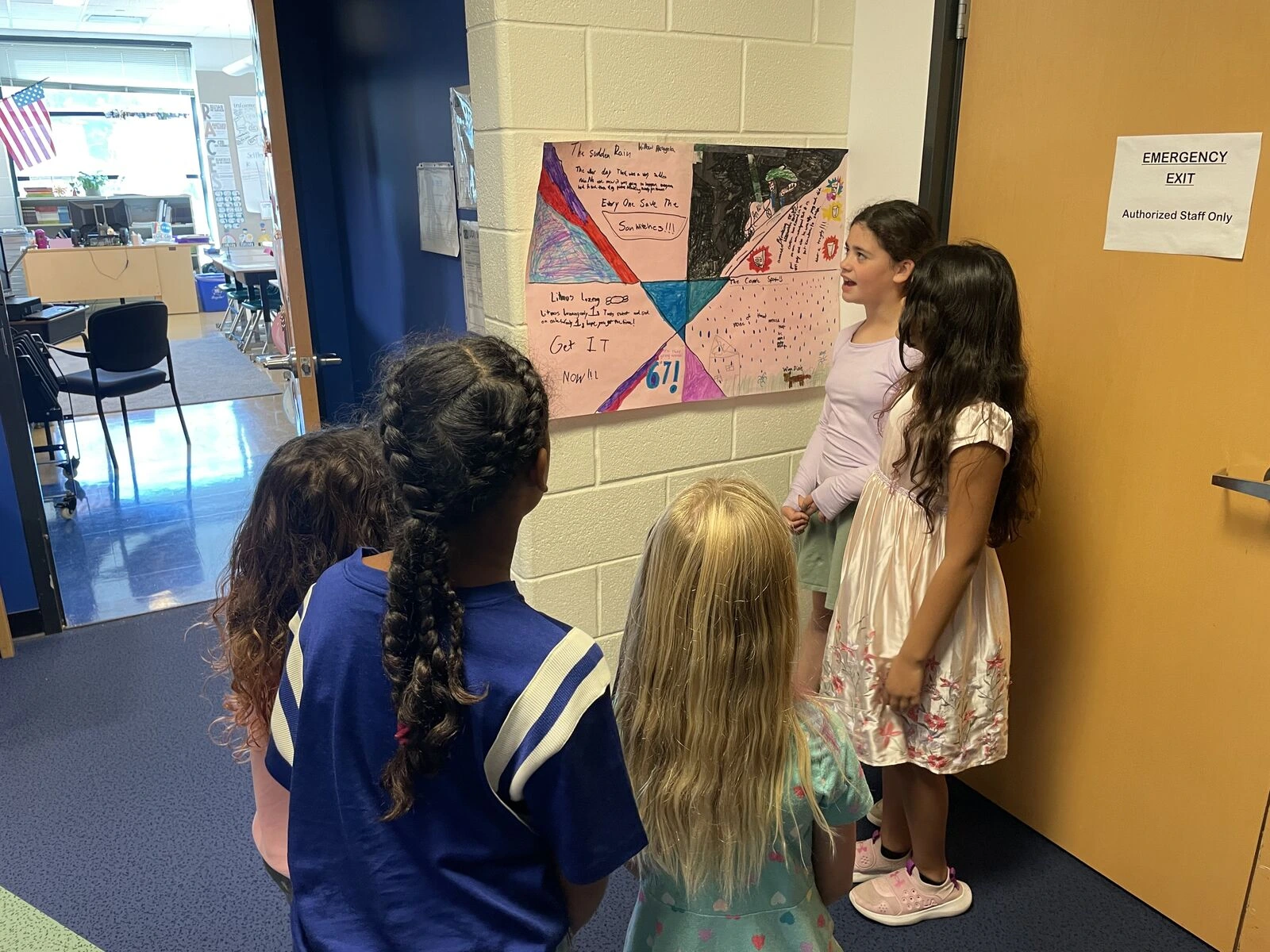
Students discuss a colorful classroom poster on the wall

Summary: 

IB® PYP and Montessori offer different elementary learning experiences. IB® PYP uses a structured, inquiry-based approach that connects subjects and encourages collaboration, while Montessori emphasizes independence, hands-on learning, and self-paced progress.

AP is not a direct elementary option because it is designed for high school students taking college-level courses. Families comparing private schools in Virginia Beach should look beyond program names and consider classroom instruction, teacher feedback, student work, and their child’s learning style.

The best choice is the program that provides the right balance of challenge, support, independence, and engagement.

IB® vs Montessori vs AP

For elementary-aged children, the most relevant comparison is IB® PYP versus Montessori because AP is designed for high school students. IB® PYP may suit children who benefit from structured, collaborative inquiry and global connections, while Montessori may fit children who thrive through independence, hands-on activities, and self-paced learning. The right choice depends on how your child learns, responds to feedback, and participates in the classroom.


Choosing the right approach for elementary education ultimately comes down to finding the right fit. The International Baccalaureate
® Primary Years Program (IB® PYP), Montessori, and Advanced Placement (AP) each stem from distinct philosophies that lead to different classroom experiences. While students may find the wrong kind of program leads to them fighting the framework as opposed to learning through it, the right match can build curiosity, confidence, and steady academic growth. 

Families weighing options across Virginia Beach private schools usually find that fit comes down to daily practice in the classroom, such as how students ask questions, show work, and get feedback. When comparing top private schools in Hampton Roads, bring a short checklist tied to your child’s needs—instruction, assessment, language, and family communication.

Understanding the IB® Primary Years Program (PYP)

The IB® Primary Years Program serves students aged 3–12 and builds learning around inquiry, real-world contexts, and consistent habits of reflection. Students work through connected units that tie literacy, math, science, social studies, arts, and languages together, so skills reinforce one another. The IB® learner profile keeps character in view alongside academics, asking students to be caring, principled, and open to other perspectives while they learn.

Core Philosophy and Structure

PYP classrooms ask good questions first, then gather evidence, share findings, and reflect on what worked. Teachers guide the arc of each unit and make expectations visible with clear criteria. Projects, investigations, and presentations sit alongside quizzes and short checks, so progress is demonstrated in more than one way. Schools delivering the IB® Primary Years Program keep the language consistent across grades, which helps families understand how skills build year to year.

Key Learning Features

Inquiry is intentional, not aimless. Students test ideas, revise work with feedback, and connect local experiences to broader contexts. Language learning in the primary years strengthens communication across subjects and supports later study. For families seeking a structured path within a globally recognized framework, the IB® Primary Years Program provides continuity without compromising student voice.

Exploring the Montessori Method

Montessori is child-centered and hands-on. Classrooms are carefully prepared, materials are designed to be self-correcting, and students move through tasks at their own pace within clear routines. Mixed-age groupings support leadership and mentorship, with teachers acting as guides who observe closely, introduce materials at the right moment, and step back to allow children to practice independence.

Learning Environment and Materials

Work blocks are long enough to allow deep focus. Students choose activities, repeat them until they reach mastery, and tidy their space before moving on. The emphasis on practical life skills, fine-motor development, and sensorial learning builds confidence early. Families who value self-direction and steady, internal motivation often find Montessori to be a strong match for the primary years.

Advanced Placement (AP) Programs: Not for Elementary

AP is a high school program offering college-level courses and exams. Its design, content depth, and assessment style do not translate to elementary grades. Rather than viewing AP as an elementary-level comparison point, families can consider how the IB® PYP builds foundational skills for future academic pathways. Through inquiry, research, communication, reflection, critical thinking, and self-management, the IB® PYP can help prepare students for the demands of later AP courses and/or advanced IB® programs.

Comparing IB® PYP and Montessori for Elementary Learners

  • Both the IB® PYP and Montessori approaches treat the child as an active learner, giving students real responsibility for their work. They differ in structure and how progress is demonstrated.
  • Learning philosophy. PYP uses teacher-guided inquiry with shared unit goals. Montessori emphasizes self-paced exploration with the teacher as a quiet coach.
  • Classroom rhythm. PYP builds projects and collaborative tasks into a school-wide scope and sequence. Montessori relies on uninterrupted work cycles and individual progression.
  • Evidence of learning. PYP blends performances, projects, and short assessments with consistent criteria. Montessori leans on direct observation and mastery of materials, with less emphasis on frequent testing.

Outcomes and Preparation

PYP offers a clear pathway into later IB® programs and maintains a global context from the outset. Students learn to plan a task, share their process, and reflect on results. Montessori fosters independence, concentration, and practical problem-solving skills, which transfer well. The question becomes less about “which is best” and more about “which program matches how your child learns” and “how does your family want school to feel?”

Making the Right Choice for Your Child

Choose PYP when your child enjoys collaborative work, benefits from visible structure, and is excited by connecting class topics to the broader world. Choose Montessori when your child thrives with choice, enjoys, or easily settles into long stretches of focused practice, and is motivated by mastering tasks at a personal pace. Many parents start with a simple “private school near me” search, then narrow the list after a classroom visit. When touring top private schools in Hampton Roads, ask to see a current unit plan and samples of graded work to understand expectations. 

Key Takeaways

  • IB® PYP combines teacher-guided inquiry, collaboration, reflection, and interdisciplinary learning within a structured framework.
  • Montessori emphasizes independence, hands-on materials, uninterrupted work periods, and progress at an individual pace.
  • AP is not an elementary school curriculum; it is a college-level academic program intended primarily for high school students.
  • The best elementary program is the one that aligns with your child’s learning style, motivation, need for structure, and comfort with collaboration.
  • A classroom visit can reveal more than a program label. Observe how students work, receive feedback, solve problems, and communicate their learning.
  • The IB® PYP develops foundational learning skills that can support future success in AP courses and/or advanced IB® programs.

Strelitz and the IB Primary Years

If you are exploring the IB Early Years Program, look for schools that make inquiry tangible for children aged 3–4 through simple questions, play-based exploration, and early reflection. Strelitz International Academy delivers the IB® approach in the early and primary years with a consistent emphasis on inquiry, language, and community. That focus helps young students practice communication and reflection early, which supports smooth transitions as expectations rise through the grades.

Families who are timing applications should review the Early Years application process and deadlines, as well as the Primary Years application process and deadlines, to ensure school visits and paperwork stay on track.

Frequently Asked Questions

Email Us Call Us