Is IB Right for My Child? A Parent’s Checklist Before Applying to Strelitz International Academy

Parents reviewing an IB school checklist.

Summary

The IB Primary Years Program can be a strong fit for children who are curious, willing to participate, and ready to learn through questions, discussion, and real-world connections. For parents comparing elementary schools near Norfolk, VA, the better question is whether the program matches how your child learns and how your family thinks about education.

This checklist can help you look at fit before applying to Strelitz International Academy. It covers learning style, classroom comfort, family values, and the practical admissions steps that help parents make a confident school decision.

What Is the IB PYP?

The IB Primary Years Program, or PYP, is the elementary-level framework of the International Baccalaureate for children ages 3 to 12. It helps young learners build academic skills while becoming more active participants in their own learning.

A Framework Built Around Inquiry

The PYP uses an inquiry-based, transdisciplinary approach. Instead of treating every subject as a separate task, students explore larger ideas through guided questions, classroom discussion, hands-on work, and reflection.

The official IB framework is organized around six transdisciplinary themes, including “Who we are,” “How the world works,” and “Sharing the planet.” Those themes help children connect reading, math, science, social studies, art, and personal growth.

How It Feels Different From a Traditional Classroom

In a traditional classroom, the teacher often presents information and students practice the answer. In a PYP classroom, the teacher still guides the learning carefully, but students are asked to observe, ask, explain, and connect ideas.

Structure still matters. A strong IB classroom uses structure to foster curiosity and make it productive.

Quick Fact: The PYP is designed for children ages 3 to 12 and uses six transdisciplinary themes to organize inquiry across subject areas.

Is the IB Program Right for My Child?

Mother reviewing a IB school checklist with her daughter.

The IB program may be right for your child if they respond well to questions, hands-on learning, reflection, and classroom discussion. A child does not need to be outgoing or advanced in every subject, but they should be open to participating in the learning process.

1. Does Your Child Like Asking Questions?

Children who wonder how things work often respond well to inquiry-based learning. That kind of curiosity matters in the PYP. Teachers can use those questions to guide investigation and help students build a deeper understanding.

2. Does Your Child Learn Well Through Doing?

The PYP often includes projects, experiments, group tasks, observation, and reflection. Children who enjoy making, testing, drawing, building, or talking through ideas may feel especially engaged.

Students are often asked to apply skills in a larger context.

3. Can Your Child Participate in Discussion?

IB classrooms value communication. Students may explain their thinking, listen to classmates, and reflect on what they learned.

A child does not need to be the first person to speak. Quiet students can thrive when teachers create different ways to participate, including small-group work, written reflection, and individual guidance.

Tip: During a school visit, ask how teachers support quieter children. The answer can tell you a lot about the classroom culture.

4. Is Your Child Learning to Work With Others?

Collaboration is part of the IB experience. Students practice listening, sharing responsibility, and seeing problems from more than one viewpoint.

Some children need support with this, especially in the early years. The key is whether the school helps students build those habits with patience and clear expectations.

5. Does Your Family Value Global Awareness and Community?

At Strelitz, that global outlook is paired with Jewish values, including respect, responsibility, community, and tikkun olam—the idea that people have a role in improving the world around them.

For families looking for a Jewish private school in Hampton Roads, that combination can be especially meaningful. Families do not need a Jewish background to apply, but they should be comfortable with a school culture shaped by Jewish traditions and community life.

What Do Parents Look for in IB Schools?

Parents often look for more than the curriculum when comparing IB schools. They want to know whether the school can support their child academically, socially, and personally.

1. Classroom Fit

Ask how teachers balance inquiry with foundational skills. A strong PYP school should be able to explain how reading, writing, math, and science are taught within the broader inquiry framework.

2. Teacher Support

The PYP depends on teachers who know students well. Small classes can make it easier for teachers to notice how each child thinks, participates, and responds to challenges.

Strelitz emphasizes small class sizes and individual attention for families comparing elementary schools near Norfolk, VA. That matters because a child-centered model works best when teachers have time to understand each learner.

3. Values and Community

Families comparing Norfolk elementary schools are usually weighing more than academics alone. They are also looking for a setting where teachers understand how their child learns, communicates, and adjusts to new challenges.

Strelitz combines the IB PYP with a Jewish day school environment. For families searching for a Jewish Elementary School near Norfolk, VA, that creates a distinctive blend of inquiry, values, and close community.

For more background on why the early years matter, read Strelitz’s blog on how early education supports academic success later on.

An IB School Admission Checklist for Parents

A thoughtful application process should help both the school and the family understand fit. Before applying, parents can use this checklist to prepare for a more useful conversation.

1. Before You Visit

Think about how your child learns best, what has worked well in past classrooms, and where they may need extra support. Write down questions about classroom structure, social adjustment, communication with teachers, and how the school supports new students.

2. During the Campus Tour

Look for signs of active learning. Notice whether students are asking questions, using materials, working together, or explaining ideas. Pay attention to how teachers respond when a child is confused or curious.

A visit to Strelitz International Academy can also help families understand the daily feel of the school, from classroom routines to the broader community.

3. After the Visit

Talk with your child about what they noticed. Ask what felt interesting, comfortable, or different. Then review the admissions requirements, including the online application, student records, teacher input, and any visit or shadow opportunity recommended by the admissions team.

Key Takeaways

  • The IB PYP can be a strong fit for children who enjoy questions, hands-on learning, reflection, and classroom participation.
  • A child does not need to be extroverted to thrive in IB, but the school should support different participation styles.
  • Parents should carefully consider classroom structure, teacher support, values alignment, and community fit.
  • A campus visit is the best way to understand whether the school environment fits your child. 

Conclusion

Choosing an IB school is really a question of fit. The right environment should support your child’s curiosity, confidence, academic growth, and sense of belonging.

For families comparing schools in Norfolk, Virginia Beach, and the broader Hampton Roads region, Strelitz International Academy offers a distinctive combination of IB learning, Jewish values, small classes, and community connection. To see whether the school is the right fit for your child, schedule a campus visit or contact Strelitz International Academy to begin the admissions conversation. 
Frequently Asked Questions

How Does Early Education Support Academic Success Later On?

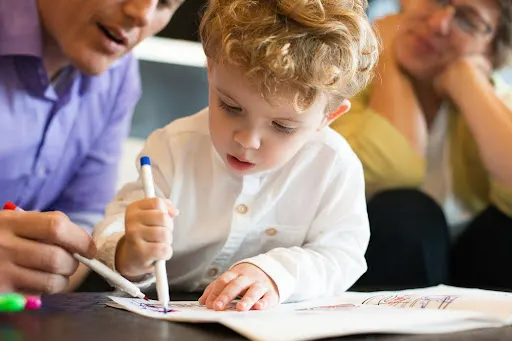
Early education child learning to write with family support

Summary

Early education helps shape how children learn, think, and grow long after the preschool years. Strong early learning environments support academic readiness, cognitive development, and the habits that help children succeed over time. This guide looks at those long-term benefits and explains why the right school setting matters for families across the Hampton Roads region. 

How Do the Early Years Shape Later Learning?

The impact of early education on academic success often shows up in the years that follow, not only in the first year of school. Children who begin in strong early learning environments are often better prepared for classroom expectations. They tend to enter school with stronger early language skills, better attention, and more confidence in structured learning settings.

That matters because the first years of school build on one another. A child who enters kindergarten ready to participate and engage with instruction is often better positioned to keep building from there.

How do preschool experiences affect future academic performance?

The effects of preschool education on future academic performance go beyond early worksheets or readiness checklists. A well-designed preschool environment helps children learn how to learn. That includes curiosity, persistence, communication, and flexibility.

When children practice these skills early, they are often better prepared for:

  1. early reading and writing instruction
  2. foundational math concepts
  3. independent work habits
  4. classroom collaboration
  5. confidence during academic transition

This is one reason families thinking long-term often look beyond short-term milestones and focus on whether a program is helping their child build durable learning habits.

Why does inquiry matter?

Children learning science in early education

Children learn more deeply when they are encouraged to ask questions, make connections, and actively explore ideas. That approach underscores the long-term importance of early childhood education for learning, as it builds a stronger intellectual foundation rather than just a short-term academic boost.

Tip: When visiting an early childhood program, pay attention to how teachers respond to children’s questions. That often tells you whether curiosity is being encouraged or simply managed.

What Is the Long-Term Importance of Early Childhood Education for Learning?

The long-term benefits of early childhood education for students are not limited to one grade level. High-quality early education can support habits and skills that continue to matter as children grow. Strong language development, self-regulation, attention, and confidence do not stay in preschool. They carry into elementary school and beyond.

That’s why the long-term importance of early childhood education for learning is really a question of foundation. Children who begin with strong support often have a more stable base for later growth.

What kinds of long-term gains do families value most?

Parents are often looking for outcomes that go beyond test performance. They want children who can think clearly, communicate well, adapt to challenges, and stay engaged in learning.

In practical terms, early education can help support:

  • stronger academic confidence
  • better classroom participation
  • improved communication skills
  • healthier peer relationships
  • greater comfort with new learning experiences

Those outcomes matter because success in school is not only about mastering content. It is also about how a child approaches the learning process itself.

How Can the Right School Strengthen These Long-Term Benefits?

Not all early education experiences are equally strong. The benefits described above depend heavily on the quality of the environment, the teachers, and the curriculum structure. A school that values the whole child will usually do more to support lasting growth than one focused only on short-term performance.

That is one reason families in Virginia Beach, Chesapeake, or Norfolk often spend time carefully comparing private schools. They’re choosing a learning philosophy as much as a first classroom.

What makes Strelitz International Academy stand out?

For families in Hampton Roads, Strelitz International Academy offers a distinct early learning environment shaped by inquiry, strong relationships, and whole-child development. As the only IB® Program Elementary School in Hampton Roads, Strelitz gives students an academic foundation that emphasizes curiosity, global awareness, and thoughtful engagement from an early age.

That matters for families searching among the top private schools in Hampton Roads. A strong early program should do more than prepare children for the next year. It should help them build the habits, confidence, and thinking skills they will continue using throughout their education.

For families looking at elementary schools near Norfolk, VA, that combination of academic structure and child-centered learning can be a meaningful differentiator.

How does the IB Primary Years Program support young learners?

The IB Primary Years Program supports children by treating them as active participants in learning. Instead of focusing only on memorization, it encourages students to explore ideas, make connections across subjects, and develop a stronger sense of agency.

That kind of environment underscores both the importance of early childhood education for cognitive development and the impact of early education on academic success.

Key Takeaways

  • The long-term benefits of early childhood education for students include academic, social, and cognitive growth.
  • The impact of early education on academic success often shows up through readiness, confidence, and stronger learning habits.
  • The importance of early childhood education for cognitive development includes attention, language, memory, and problem-solving.
  • The effects of preschool education on future academic performance are shaped by both program quality and learning approach.
  • For families in Hampton Roads, Strelitz International Academy offers a distinctive option among private schools.

Conclusion

Early education matters because it shapes how children learn, relate to others, and grow over time. The strongest programs do more than prepare children for kindergarten. They help build the foundation for later academic success, stronger thinking skills, and more confident participation in school.

For families considering the long-term importance of early childhood education for learning, the key question is not only whether a child will be ready next year but whether the school experience is helping build habits and capacities that will still matter years from now.

If you are exploring early learning options in Hampton Roads and want to see how an inquiry-based environment can support your child’s growth, schedule a visit with Strelitz International Academy. It is a chance to see how the school helps young learners build a strong foundation for the years ahead.

Frequently Asked Questions

How to Apply to an IB® Private Elementary School: Step-by-Step Guide for Parents

Parents meet advisor for IB® school application

Choosing the right educational path for a child is a major decision, and many families see an International Baccalaureate (IB®) education as a strong option for building academic skills and independence. If you are exploring how to apply to an IB® private elementary school in Hampton Roads, a clear plan makes the process easier to manage. Schools follow a structured IB® private school application process, and this IB® Elementary School Admissions Guide outlines what to expect, the main IB elementary school enrollment steps, and simple ways to prepare.

Why Choose an IB Private Elementary School?

IB® schools help students become confident, curious learners who understand their role in the broader world. Families often find small classes and a community that values inquiry, respect, and responsibility. The aim is to pair solid academics with social and emotional growth.

Understanding the IB® Primary Years Programme (PYP)

For elementary-age students, the IB® program application process for parents focuses on the IB® Primary Years Programme (PYP), which serves children from about age 3 to 12. The PYP is transdisciplinary, so students explore broad themes across subjects instead of learning each topic in isolation. Learning is inquiry-based and connected, and the IB Learner Profile encourages children to grow as thoughtful and caring community members.

When to Start the Application Process

Many schools begin accepting applications in the fall for the following school year, and popular entry grades can fill quickly. Starting early leaves time to visit, ask questions, and gather required documents or financial aid materials. At Strelitz International Academy, one of the Private IB schools in Virginia Beach, families are encouraged to contact the admissions team early to learn about available spaces in each grade and key dates to remember.

Step-by-Step Application Process for IB® Private Elementary Schools

Parents applying to IB® private school online

Every school has its own details, but IB school application requirements tend to follow a similar sequence.

1. Research and Visit

Identify authorized IB® World Schools in your area, review their programs, and schedule a tour to see classrooms, meet staff, and get a feel for the school culture.

2. Submit the Application and Fee

Complete the school’s application, usually online, and pay the non-refundable application fee so the admissions team can open a file and begin review.

3. Provide Student Records

Sign a records release so current schools or childcare centers can send report cards, progress notes, and any relevant test scores to the admissions office.

4. Request Teacher Recommendations

Ask a current teacher or caregiver to complete a brief evaluation describing your child’s learning habits, social skills, and classroom behavior.

5. Schedule a Student Visit

Most IB® elementary school enrollment steps include a visit where your child joins a class or activity, giving both the school and your child a chance to experience the environment.

6. Review, Acceptance, and Enrollment

Once all materials are received, the admissions team reviews the file and shares a decision. If a place is offered, families sign an enrollment agreement, pay a deposit, and provide final documents such as a birth certificate and immunization records.

Tips to Strengthen Your Child’s Application

A strong application shows who a child is and how a family approaches education. Real examples of curiosity, kindness, or perseverance are more helpful than a list of grades, and being open about learning needs allows the school to assess support resources.

Common Mistakes Parents Should Avoid

Waiting to apply until late spring or summer can limit options if classes are already full, and focusing only on the IB® label without weighing whether an inquiry-based classroom fits a child’s learning style can lead to frustration later. Incomplete paperwork is another common issue, so it helps to follow a simple checklist and confirm that all IB school application requirements have been submitted.

Taking the Next Step in Your Child’s Education

Understanding how to apply to an IB® private elementary school makes the process clear and straightforward. By starting early, staying organized, and asking questions along the way, families can navigate the IB private school application process with greater confidence. Strelitz International Academy is proud to be one of the Private IB® schools in Virginia Beach, offering the IB® Primary Years Programme in a warm, values-driven community. To learn more, families can schedule a tour to see the school in person or apply now for admission to begin planning the right educational path for their child.

Frequently Asked Questions

Email Us Call Us